
When a roof leaks, most homeowners look at the shingles. That is almost never where the problem is.
Shingles in the open middle of a slope, doing the one thing they were designed to do, mostly do it well for decades. Roofs leak where they get interrupted: where the roof meets a chimney, where a skylight punches through it, where two planes meet in a valley, and where pipes and vents come up through the surface.
The component that seals all of those interruptions is flashing, and flashing failure is one of the most common causes of roof leaks anywhere, including here.
What flashing actually is
Flashing is the metal that bridges the gap between the roof surface and whatever is coming through it or butting up against it.
Around a chimney, that usually means two pieces working together. Step flashing is a series of L-shaped metal pieces woven in with the shingle courses as they run up the side of the chimney, so each piece laps the one below it. Counterflashing is a second layer set into a groove cut in the masonry, folded down over the top of the step flashing so water running down the brick cannot get behind it.
That two-part design exists for a reason. A chimney and a roof are two different structures that move independently, and they move at different rates as temperatures change. A single piece of metal caulked between them cannot absorb that movement. Two overlapping layers can.
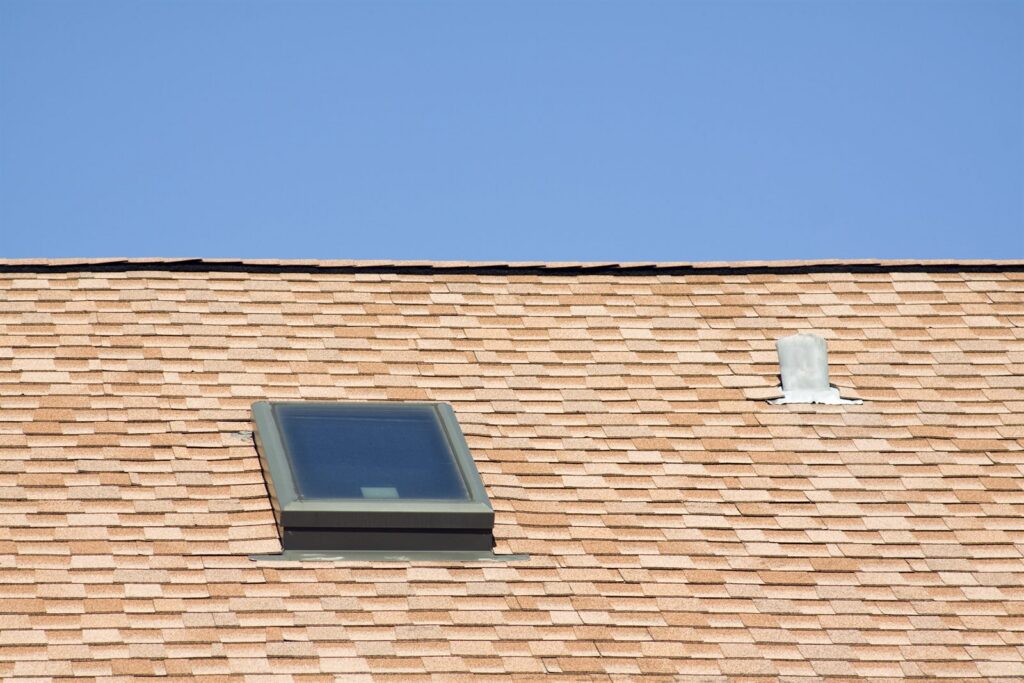
Skylights work on the same principle: a flashing kit that laps water over and around the unit rather than sealing it in place.
Why it fails
Sealant does not last. Caulk at a flashing joint is a supporting player, not the waterproofing. It dries, shrinks, and cracks, usually within a few seasons. When a roof was originally sealed with caulk instead of flashed correctly, that leak was always coming, just not right away.
Freeze and thaw cycles work on the joint. New Jersey winters swing back and forth across freezing repeatedly rather than staying cold. Every cycle expands and contracts masonry and metal a little differently, and every cycle works the joint a little looser. It is one of the reasons chimney flashing tends to need attention sooner here than in a milder climate.
The masonry itself deteriorates. Mortar joints erode, brick spalls, and the groove holding the counterflashing loses its grip. Sometimes the flashing is fine and the wall it is anchored into is not.
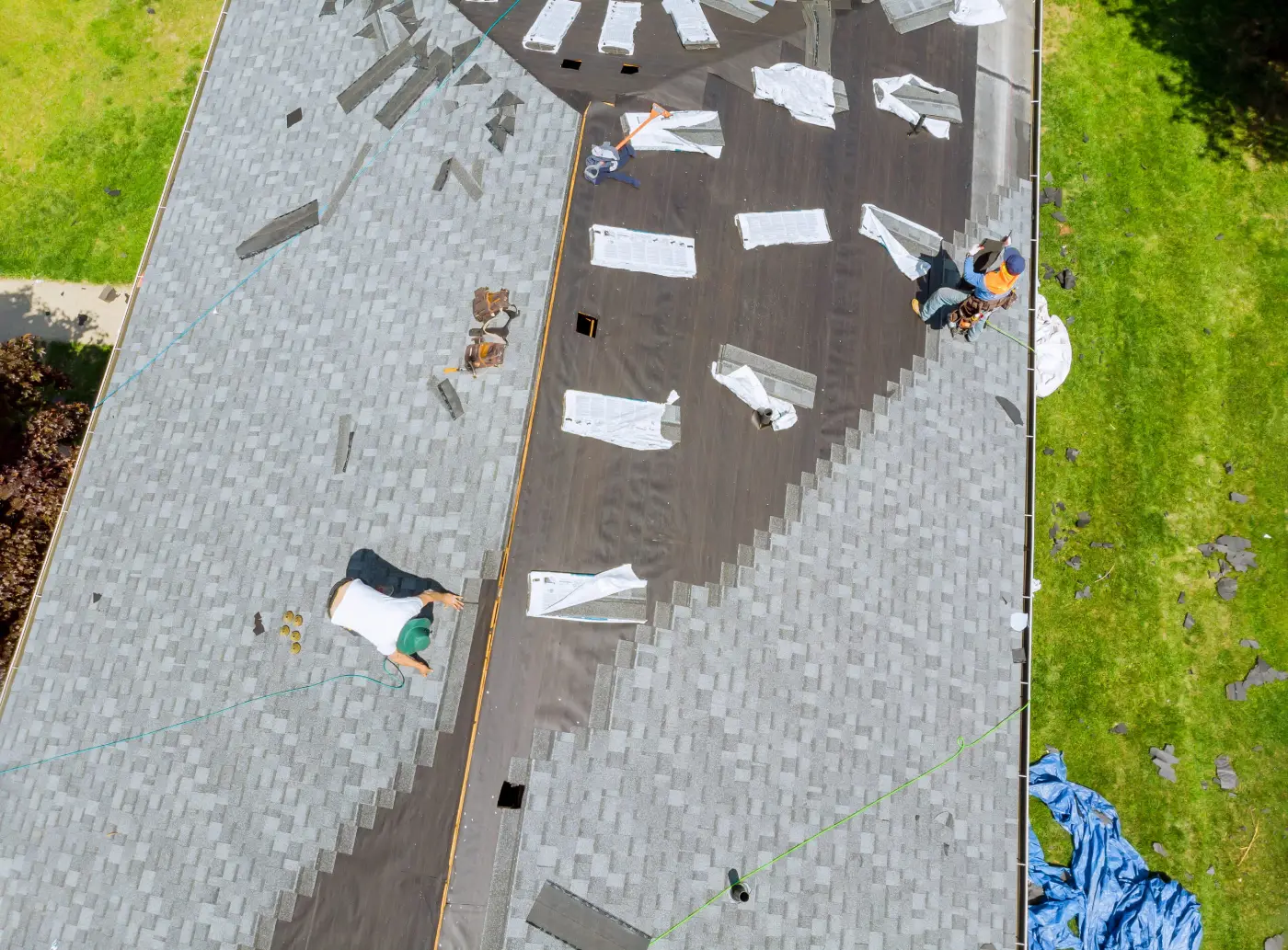
It was reused during a reroof. This is a big one. When a roof is replaced, flashing should be replaced with it. Reusing old, bent, corroded metal under a brand new roof saves a little money and leaves the most failure-prone component on the roof exactly as worn as it was. If your roof is fairly new and it is leaking at the chimney, this is worth asking about.
The skylight is simply old. Skylight units have a service life like anything else. Seals fail, and older units eventually fog between the panes.
What you might notice inside
Chimney and skylight leaks tend to show up indoors before anyone spots anything outside.
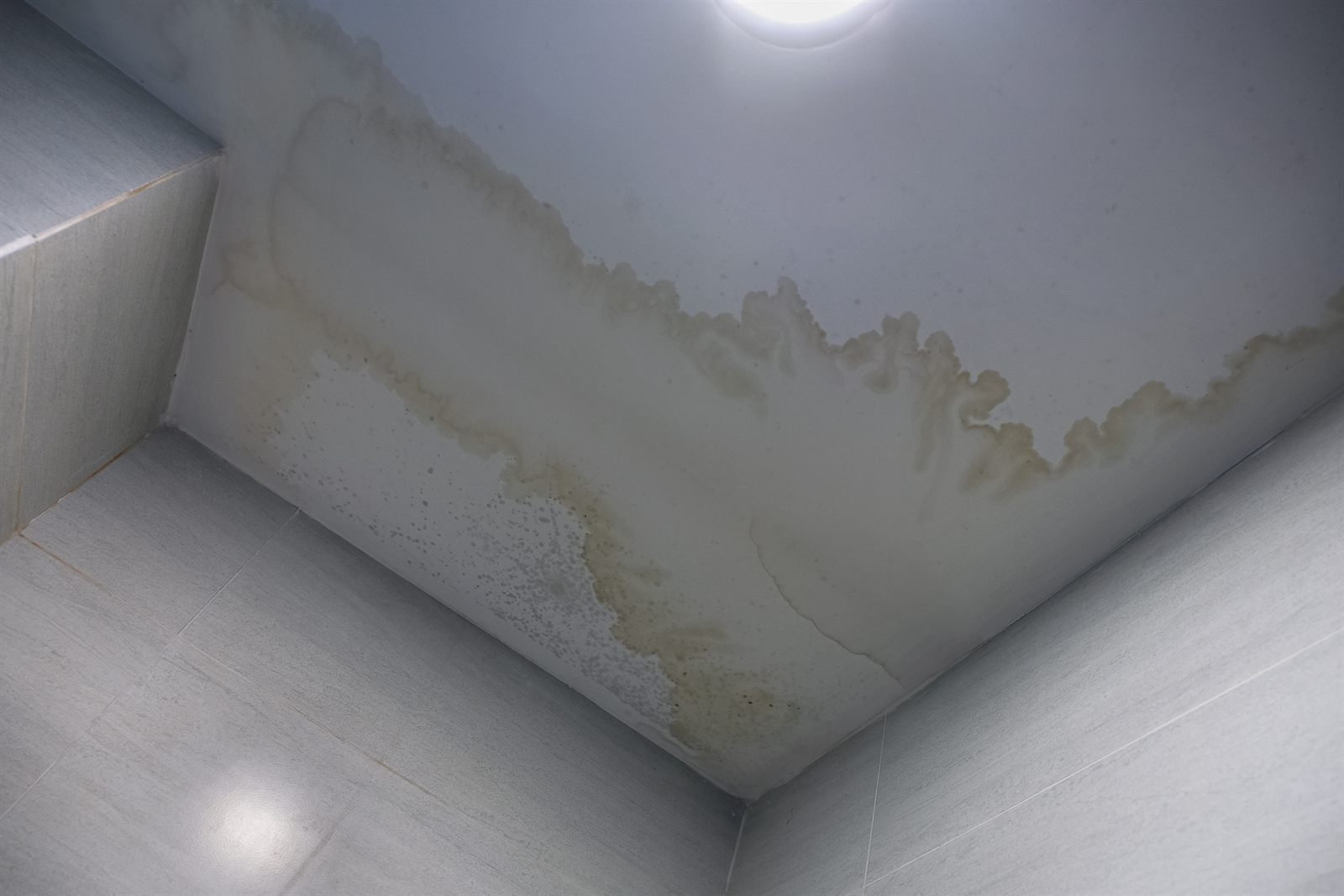
Around a chimney, look for staining on the ceiling near where the chimney passes through, damp patches on the wall beside a fireplace, peeling paint on that wall, a musty smell near the firebox, or white chalky deposits on interior brick, which is a sign water has been moving through the masonry.
Around a skylight, look for staining on the drywall of the light shaft, water running down the inside of the frame during rain, or condensation and fogging between the panes.
One thing worth knowing: water at a skylight is not always a leak. If it only appears in cold weather and shows up as droplets on the glass and frame rather than running from above, it may be condensation, which is a ventilation and humidity issue rather than a flashing one. A leak generally tracks the weather. Condensation tracks the temperature.
Don’t rule it out because the stain is somewhere else
Water that enters at a chimney can travel along the deck and framing before it drops through the ceiling, so a stain well away from the fireplace can still be a chimney problem. If a leak has already been chased once without success, the flashing is worth checking even when the damage shows up somewhere that seems unrelated.
Repair, or something bigger?
Most flashing problems are repairs, not replacements, and that is worth saying plainly because homeowners often assume a leak means a new roof.
A repair is usually the right answer when the roof itself has service life left, the leak is isolated to one detail, and the deck underneath is sound. Replacing chimney flashing, or reflashing a skylight, is ordinary roof repair work.
The conversation shifts when the roof is near the end of its life anyway, when there are leaks in several unrelated places, or when the decking has been wet long enough to go soft. At that point flashing repairs are patching a roof that has a limited amount of time left, and it can make more sense to do the flashing as part of a replacement.
There is also a sequencing point worth knowing. If your chimney’s masonry is deteriorating, the masonry work generally needs to happen before or alongside the flashing work. New flashing set into failing mortar does not last.
A note on caulk
If a contractor’s answer to a chimney leak is a tube of sealant, be cautious.
Caulk has a legitimate role in a properly flashed detail. It does not have a role as the flashing. A bead of sealant smeared over a gap will usually stop the leak for a season or two, which is long enough for everyone to believe it worked and long enough for water to keep quietly working on the deck underneath. Then it cracks and the leak comes back, usually worse, because now there is rot involved.
The same applies to roofing cement troweled around a skylight. It is a temporary measure in an emergency, not a repair.
What to expect from an inspection
A useful inspection of a chimney or skylight leak looks at more than the obvious spot. It should cover the step flashing and counterflashing, the condition of the masonry and mortar, the crown at the top of the chimney, the shingles in the area, the attic side to trace the water path, and whether the decking has been affected.
It should end with someone telling you where the water is getting in and why, not just what it costs. If you cannot get a clear answer to “where is it coming in,” that is worth noticing.
Seeing stains near a chimney or skylight? FB Roofing & Siding has worked on roofs across Monmouth and Ocean County since 1972, and offers free written estimates. Call (732) 364-1040.