
If water is coming into your house right now, start here. The explanations can wait a few minutes.
Do these things first
Move what you can. Furniture, electronics, rugs, anything sitting under the drip.
Put a container under it. Drop a towel in the bottom to stop the splashing, and empty it before it overflows.
If water is near a light fixture, ceiling fan, or outlet, shut off power to that area at the breaker. Do not stand in water to do it. Water and electricity in a ceiling is the one part of this that is genuinely dangerous, and it is worth handling immediately.
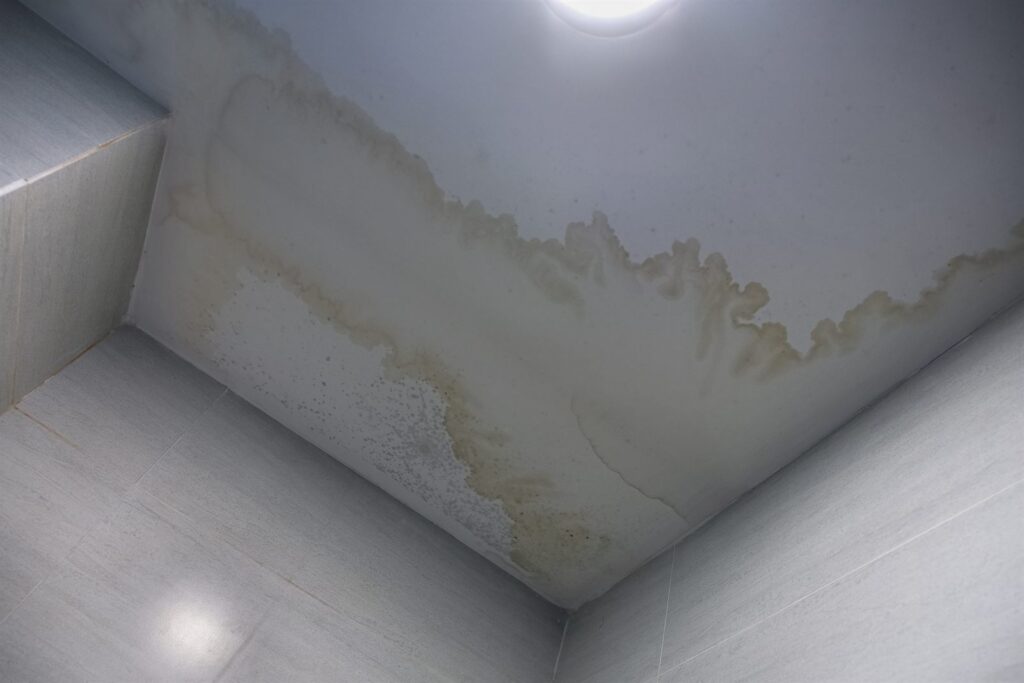
Look at the ceiling itself. If it is bulging or sagging, read the next section before you do anything else.
Take photos before you clean up. Wide shots of the room, close shots of the stain and the dripping. It takes half a minute and it is much easier than trying to reconstruct it later.
Call a roofer. The sooner someone finds the source, the less there is to repair.
If the ceiling is bulging
Drywall soaks up water, gets heavy, and can let go all at once. Keep people and pets out from under it.
If you are confident there is no light fixture or wiring in that spot, and you can reach it safely from stable footing, put a bucket underneath and make a small hole at the lowest point of the bulge with a screwdriver. Stand to the side rather than underneath, because the water can come out with force. A small hole you made on purpose is a much better outcome than a section of ceiling coming down on its own.
If there is any doubt about wiring, or the sag is large, leave it alone, keep the area clear, and mention it when you call.
Please stay off the roof
This is the most important thing in this article.
A leaking roof is usually wet, and often has something wrong with it that you cannot see from below. Falls from residential roofs send tens of thousands of people to emergency rooms every year in this country. There is nothing you can see from up there that changes what happens next.
The same goes for tarping it yourself. It gets recommended online constantly, and it means climbing onto a wet roof, usually in bad weather. A tarp that is not fastened correctly channels water somewhere worse or blows off in the next gust.
One more: do not squirt roofing cement or sealant at a leak you have not located. Sealing over a leak whose source nobody has identified is one of the most common ways a small repair turns into a large one. The water keeps coming in and simply finds a new path, and now the real entry point is buried under a patch that has to be undone.
The stain is probably not under the leak
This is the part that surprises most homeowners, and it explains why roof leaks are harder to pin down than they look.
Water gets in at one point and then goes wherever gravity and the structure take it. It runs along the top of the roof deck, follows a rafter, travels across framing, and finally drops through the ceiling at the first opening it finds, which might be a light fixture or a seam in the drywall.
By the time you see a stain, the water may have traveled several feet from where it actually entered.
Two things follow from that. The stain tells you water is getting in, but not where. And guessed repairs usually fail: replacing shingles directly above a stain is a coin flip, because the water may have come in at a flashing detail well up the slope. The repair changes nothing, the leak returns with the next rain, and everyone concludes the roof cannot be fixed.
Finding the real entry point normally means getting into the attic where there is access, tracing the water trail up the framing to the highest point of staining, and matching that against what is on the roof above it.
Where leaks usually start
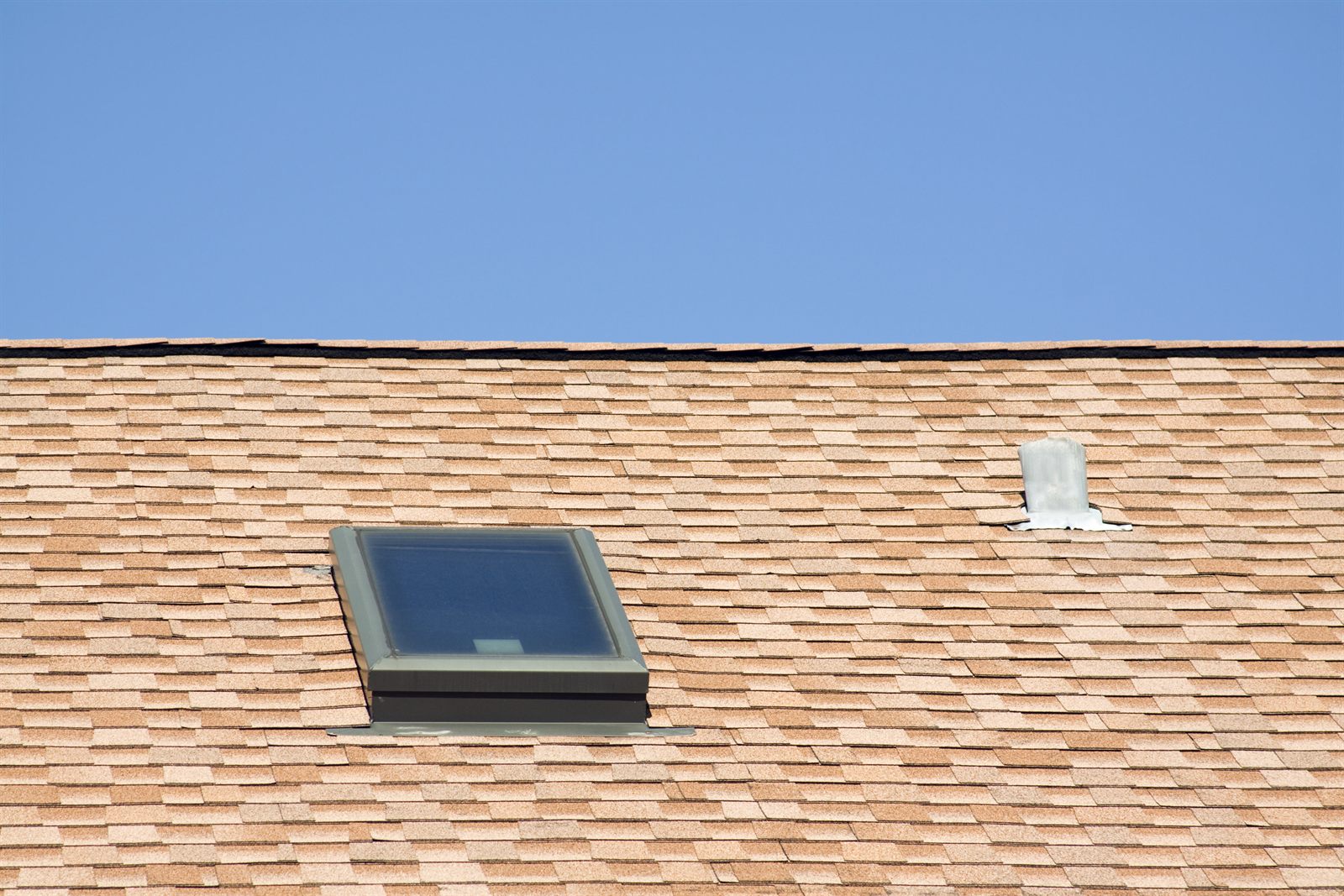
Very few leaks start in the middle of a roof slope. Shingles doing the one job they were designed for mostly do it well. Leaks start where the roof gets interrupted: at flashing where the roof meets a wall, chimney, or dormer; at valleys where two planes meet and water concentrates; around plumbing vents and exhaust vents, where the rubber boot is often the first component on the whole roof to fail; and at the roof edge, where overflowing gutters can push water back behind the fascia.
Damaged or missing shingles cause leaks too, though wind damage often does not look like damage. A gust can break the sealant strip holding a shingle down and drop it back in place looking untouched.
Is it definitely the roof?
Not always, and it is worth ruling out before anyone comes out for the wrong trade. It may be plumbing if there is a bathroom or kitchen directly above the stain, or if it shows up when there has been no rain. It may be condensation if the staining is diffuse rather than a defined drip and worse in winter. It may be air conditioning if there is equipment or ductwork above the ceiling, since a blocked condensate line is a classic cause of a summer stain with no rain involved.
The simplest test: note the date and weather each time it appears. If it only ever happens during or just after rain, the roof or the exterior is where to look.
Why some roofs only leak in certain storms
Shingles shed water downward, and they handle rain falling more or less straight down very well. Wind-driven rain is different: it gets pushed sideways and upward, and it can work under a lap or behind a flashing leg in a way ordinary rain never does. Along the Monmouth and Ocean County coast that is common, since a nor’easter pushes rain from the same direction for hours.
The pattern tells you something useful. A leak in every rain, in the same spot, usually means something is simply open. A leak only in heavy wind-driven rain usually means something is being overwhelmed rather than open. If you can tell a roofer which direction the wind was blowing, you have narrowed the search considerably.
When to get it looked at
Sooner rather than later if water is entering during normal rain, if the ceiling is stained or sagging, if there is water near electrical fixtures, if the stain is growing, or if it has leaked more than once in the same place.
And do not assume it stopped because the drip stopped. The rain stopped. There is likely wet material sitting in the ceiling or attic right now, and it will happen again in the next comparable storm.
The reason to move reasonably quickly is not drama, it is arithmetic. The roof repair itself often does not change much in cost between now and three months from now. What changes is everything the water touches in the meantime: insulation, drywall, trim, decking. The roof repair is usually the smaller half of that bill.
Dealing with a leak? FB Roofing & Siding has been repairing roofs across Monmouth and Ocean County since 1972. Call (732) 364-1040 for a free written estimate.