
A limb comes down in a storm and takes out six feet of siding on one gable. The damage is small, the fix sounds simple, and then you find out that the color was discontinued eleven years ago and the profile is not made by anyone at all now. This is one of the most common siding calls we get, and the answer is more interesting than it first appears.
Why an exact match is usually not available
Three separate things have to line up, and they rarely all do.
The color. Vinyl manufacturers retire colors regularly, and the palette turns over meaningfully every several years. A color that was standard when your house was built may simply not exist in current production.
The profile. Siding is described by its exposure and shape, such as double four inch clapboard or single six inch Dutch lap. Those sound generic, but the panel geometry, the lock at the bottom edge and the nail hem all vary between manufacturers. Panels from two different companies with the same nominal description often will not interlock, and where they do, the shadow line at the overlap reads differently across a wall.
The manufacturer. Siding brands have consolidated substantially. Product lines are discontinued, renamed and reformulated, and a name that still exists may not be the same panel it was.
Fading is the part people underestimate
Even when you find the exact product in the exact color, it will not match, because your existing siding has been outside for fifteen years.
Vinyl fades, and it fades unevenly. The south and west elevations take the most ultraviolet exposure and lighten fastest. North walls barely change. A wall shaded by a mature tree ages differently from the wall beside it. Darker colors show the drift most, which is worth knowing if you are choosing siding today. The result is that a brand-new panel of the correct color set into a weathered wall reads as a patch from across the street, because it is brighter than everything around it.
This surprises people more than the discontinuation does. It is also the reason the best repair strategy is not really about sourcing at all.
The fix that actually works: move the siding, not the problem
The professional approach to a damaged visible wall is to harvest matching panels from somewhere nobody looks, and put the new stock there instead.
In practice that means pulling panels from the back of the garage, a wall behind a deck, a section below a porch roof, or the least visible elevation of the house, using those panels to repair the damaged area on the front, and installing the new, slightly-off replacement panels in the donor location. The repaired wall matches perfectly, because the panels came off the same house and weathered alongside it. The mismatch still exists, but it now sits where the only person who will ever notice it is the one mowing behind the garage.
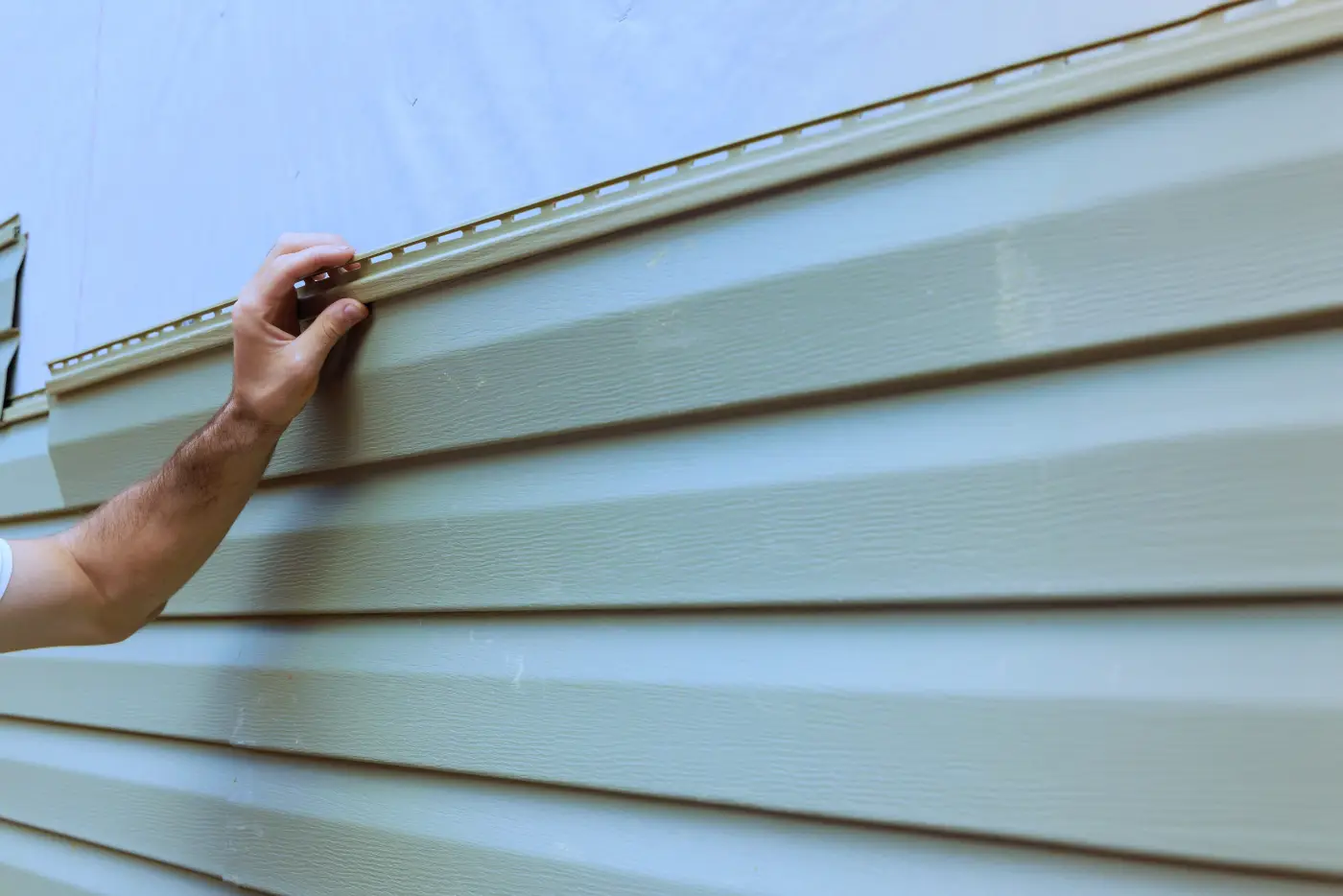
This works because siding can be unlocked and removed without damage if the person doing it knows how. It takes a zip tool and patience rather than force, and it is one of the clearer differences between somebody who installs siding and somebody who has only ever put it on new construction.
Two constraints are worth knowing. The donor wall has to be large enough to yield full courses. And the more coats of weather the house has, the better it works, because by then every panel on the house has faded to roughly the same place.
Check for a stash before anything else
Before assuming the color is gone, look in the garage, the attic, the crawl space and behind the shed. It is surprisingly common for the original installer to have left a bundle, and one bundle solves the whole problem.
While you are looking, check the back of a panel. Manufacturers stamp the brand and often the product line and color on the reverse face and inside the nail hem. Photograph it. Even if the exact product is discontinued, an accurate identification lets a supplier find the closest current equivalent instead of guessing from a color chip held up against a wall.
If you are having siding installed now, ask for the leftover panels to be left on site and store them somewhere dry and flat. It is the cheapest insurance in home maintenance.
When to stop patching and replace to a break
Sometimes harvesting is not practical. The donor walls are too small, the damage is too extensive, or the siding is old enough to be brittle and cracks as soon as it is unlocked. Fifteen or twenty years of ultraviolet exposure makes vinyl noticeably less forgiving, and there comes a point where removing a panel destroys three around it.
The alternative is to replace a defined area and let the change of material land on a natural line rather than in the middle of a wall. Corner posts, a window line, a change of plane or a full elevation all work as boundaries. A whole gable end in a slightly different shade reads as a design choice. Half a wall in a different shade reads as damage.
That is also the point where it is worth asking whether the rest of the siding is close to needing attention anyway. If the wall is cracking on removal, that is a data point about the other three walls, and the signs are covered in signs your siding needs replacement.
Painted and fiber cement siding is an easier problem
If your house has fiber cement, wood or any painted cladding, the matching problem is much smaller. Profiles are more standardized, and color is a paint question rather than a manufacturing one. A paint supplier can match an existing color from a sample, and the repaired section can be painted to blend, or a single elevation can be repainted to a clean break.
It is one of the practical arguments in favor of fiber cement that rarely comes up during the buying decision, and we touched on the broader comparison in vinyl versus fiber cement for NJ homes.
One insurance note
If the damage came from a storm or a falling limb and you are filing a claim, ask your carrier how the policy handles matching. Some policies contemplate the situation where a damaged component cannot be matched and address how much of the surrounding surface is covered. It is not universal and the answer varies, but it is worth a direct question before you accept a settlement calculated on six feet of siding.
Where to start
Look for leftover panels, photograph the stamp on the back of an existing panel, and get someone to look at whether a donor wall exists before anyone orders anything. Those three steps decide whether this is a half-day repair that disappears completely or a conversation about an elevation. We do siding work across Monmouth and Ocean counties and will tell you honestly which of the two you are looking at.