
The weather in New Jersey puts your gutters to the test, from the sudden summer downpours in Bergen County to the heavy snow loads in Sussex County. The correct size and installation can be the difference between an indoor pool and a dry basement.
It might cost thousands of dollars to fix the foundation and tiny gaps in your gutter system, so it’s not simply pouring water.
Basic water problems transform sturdy foundations into Swiss cheese and basements into mushroom fields. This is what a wise installation avoids. And that depends a lot on correct sizing and material choices for gutter installation in NJ homes.
In this blog post, we will discuss the gutter sizing and material choices for homes in New Jersey.
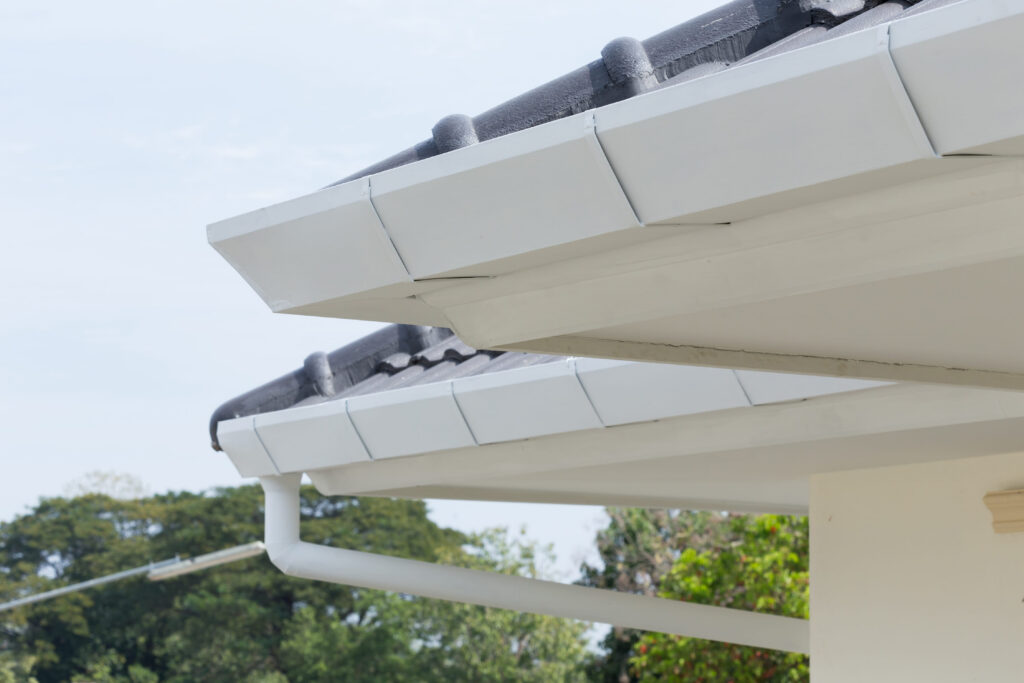
Gutter Installation Options in NJ
Why Gutters in New Jersey Face Extra Stress?
Ice dams in the winter, pollen showers in the spring, fall leaves that appear to target gutters with missile-like accuracy, and those summer thunderstorms that turn gutters into whitewater rapids are just a few of the things Jersey throws at our gutters. This is about building a protection system for your house, not just hanging some metal troughs.
What Are the Best Materials for Gutters?
The best materials for gutters are aluminum and copper/steel because they are more reliable and long-lasting. Wider gutter installation is becoming more popular, but seamless aluminum gutters with a lesser width are still often utilized in some areas. Larger versions of these gutters are also available, but these are often used for commercial or industrial structures.
Aluminum Gutters
Aluminum gutters are popular in most New Jersey houses, and for good reason. Similar to the Toyota Camry of gutter materials, they are dependable, reasonably priced, and unaffected by changes in the weather. Selecting the appropriate thickness, a minimum of .032 gauge for our climate, is crucial.
Copper/Steel Gutters
Steel or copper gutters are ideal in some circumstances. Those seaside mansions in Cape May or those old residences in Princeton require materials that are both historically and aesthetically pleasing and able to withstand sea air. They will probably outlast your mortgage, even if they cost more than your first automobile.
What is the Best Size for Gutters?
You need 6-inch gutters if your roof slopes steeply or you have a large area, and that is the reason five-inch gutters aren’t usually sufficient in New Jersey. They are similar to upgrading from a garden hose to a fire hose; occasionally, the additional capacity is crucial.
5” Gutter
- Every gutter under 40 feet long must have a minimum of one downspout.
- Gutters longer than forty feet must have two downspouts.
- Regular or typical rainfall does not cause gutters to overflow.
- Lower 5-inch gutters shouldn’t receive any drainage from taller roof gutters.
6” Gutter
- Gutter lengths more than forty feet are not permitted to have two downspouts.
- Best for upper gutters that go into lower gutters.
- Great for long runs that are more than sixty feet.
- Suitable for rooflines with a lot of water that is concentrated in a tiny area of the gutter.
- Suitable for valleys where water runs quickly and usually overflows when it rains a lot.
Other Critical Factors for Gutter Installation
The Installation of the Perfect Pitch
Have you ever seen gutters that retain water like a kid’s swimming pool? That pitch is incorrect, and it kills gutters. We’re talking about a minimum slope of 1/4 inch per ten feet. If you go any lower, you’re building a gutter retirement home and a mosquito resort.
Hidden Hangers
Those inexpensive ferrule and spike systems may be effective for a time, but eventually something will give way, much like when you use paperclips to hold up your pants. Your best option is to use hidden hangers every 24 inches. They are the unsung heroes of gutter stability.
Seamless Gutters
Seams are the enemy in the freeze-thaw cycles of New Jersey. They resemble ticking time bombs for leaks. Seamless gutters are basically a need, not simply a luxury. If January decides to play freeze-tag with your house, every seam may be a point of failure.
The Fascia Factor
Your fascia board functions similarly to the gutter system’s base. No amount of expensive hardware can keep gutters where they belong if they are mushy, rotten, or just worn out. Fascia integrity should always be checked before installation, as it is similar to inspecting the foundation before constructing a home.
Downspout
The exit method for your gutter system is a downspout. If you undersize them, you’ll get an unexpected waterfall feature. If you overspace them, a portion of your gutter will resemble a water park’s lazy river. We’re talking about at least one downspout for every thirty to forty feet of gutter.
Effective Leaf Protection
Those hardware store mesh guards function theoretically but not truly, much like installing a screen door on a submarine. Go pro or stay home if you’re investing in leaf protection. In worry-free winters and ladder-free autumns, high-quality coverings pay for themselves.
Conclusion
In New Jersey, installing gutters requires more than just reading a handbook; it also requires recognizing the particular obstacles posed by our environment and making appropriate plans. If you do it correctly, your gutter system will covertly safeguard your house throughout the year. If you make a mistake, your local foundation repair contractor will know you by name.
Keep in mind that installing gutters correctly is like insurance for the foundation of your house; it may not be thrilling, but when those nor’easters arrive, you’ll be happy you invested.